Gothic Name Generator
This gothic name generator conjures elegant, brooding names for the shadows. Gothic names don't all come from the same darkness. A Victorian name sounds nothing like an eldritch one. A witch name with Celtic roots reads differently from one built on invented syllables. This generator lets you choose the exact flavour of gothic you need — nine styles, five cultural roots, five tones — and assembles names from phoneme pools tuned to each combination.
👇 Click any name to copy it
A good gothic name earns its keep before anyone learns a single thing about the character. It sets the register: estate and inheritance, old blood and older money, herbs on the windowsill, or a designation that has mostly stopped being a name. Pick the style that matches your darkness and the rest follows.
Don't like a batch? Generate again as many times as you want, and click any card to copy it to your clipboard.
How to Use This Gothic Name Generator
Set five controls, then hit Generate. Each tunes a different layer of the name, so small changes shift the whole mood.
- Gothic Style – The most important filter. It fixes the overall register: Victorian names belong on gravestones and estate registers; Eldritch names arrive with the wrong geometry; Industrial Goth assigns a designation rather than a name.
- Cultural Root – Shapes the phonetics. English roots sound like Dickens filtered through a funeral. Slavic roots carry Eastern European dark romanticism. Celtic roots bring the mist of old myth. Latin roots ring with Roman Catholic and Italian gothic resonance. Invented roots exist only in the shadow world.
- Gender – Female, male, or neutral / androgynous. Neutral pulls from a separate pool built to read either way.
- Tone – Adjusts the finishing register: Elegant & Brooding, Pure Darkness, Dark Romance, Eerie & Unsettling, or Arcane & Ancient.
- Name part – A full name, a full name with a title, a first name only, or a surname only.
Click any name card to copy it. Each result is tagged with its style and a line of flavour lore.
The Nine Gothic Styles — What Each Sounds Like
Style is the lever that moves everything. Here's how each of the nine registers lands, and what it's good for.
Victorian Gothic
The foundational aesthetic. Names drawn from 19th-century English aristocracy, estate registers and mourning culture. Expect multi-syllabic given names — Cordelia, Mortimer, Beatrix, Algernon — paired with surnames that suggest crumbling architecture: Blackmoor, Thornmere, Ravencroft, Gravehollow. Titles show up often: Lord, Lady, Countess, The Rev.
The literary line here runs from Horace Walpole's The Castle of Otranto (1764) through Matthew Lewis and Ann Radcliffe and into the Victorian sensation novels of Wilkie Collins and Sheridan Le Fanu. Names from this period carry inheritance, mourning and repression.
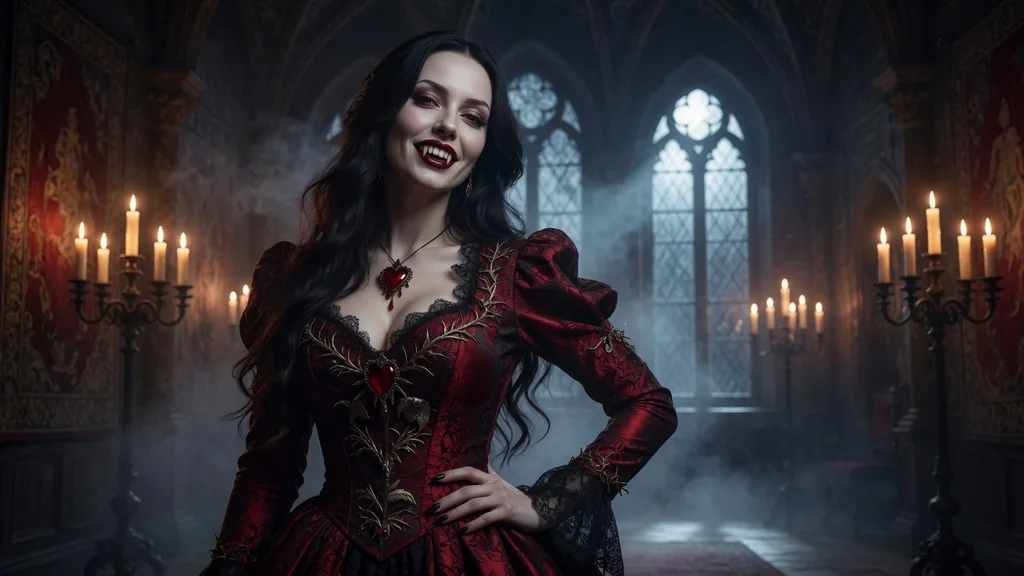
Vampire Gothic
Vampire names need longevity in the phonetics — they should sound like something that existed before the century they're speaking in. Continental titles (Count, Countess, Baron, Prince) sit beside names with Slavic or Germanic weight: Vladislav, Desdemona, Octavia, Nikolai. The particle von or de signals old blood.
Stoker's Dracula set the template: a title, an ancient Eastern European name, a place with the wrong kind of history. The best vampire names are slightly too formal for the modern world — they sound like someone who hasn't updated their self-presentation since before blending in became necessary.
Literary Gothic (Poe / Shelley)
Names that belong in the margins of dark literature. Poe favoured a classical weight that ran slightly too ornate — Ligeia, Morella, Berenice, Roderick, Usher. Shelley's characters carry a different weight: Frankenstein, Clerval, Walton — names that sound educated and European, that belong to people who read too much and think too hard.
Witch / Pagan Gothic
Witch names work in a different register from vampire names — less aristocratic weight, more elemental depth. They lean Celtic and Anglo-Saxon, connected to the land rather than the estate: Morrigan, Brigid, Rowena, Grainne. Surnames reference nature, crossroads and the old calendar: Thornbriar, Hollowmoon, Darkfen, Grimwych. The best ones feel earned through practice, not inherited through blood.
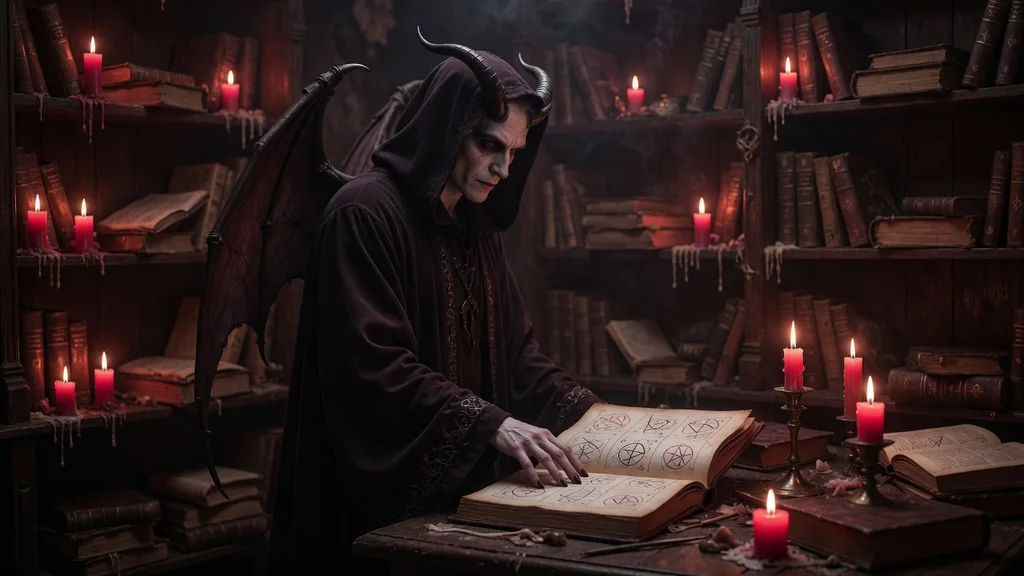
Occult / Ceremonial
Occult names draw from the Western esoteric tradition — Hermetic, Kabbalistic, Rosicrucian. They're often designations rather than personal names: Frater, Soror, Magus, Adept, followed by a motto. Aleister Crowley took Frater Perdurabo (I will endure to the end); Dion Fortune was born Violet Firth. Many reference the Tree of Life — Kether, Binah, Geburah, Netzach — and mark a specific grade and degree.
Eldritch / Lovecraftian
Eldritch names are phonetically wrong. They suggest sounds human mouths weren't designed to make comfortably: Cthulhu, Nyarlathotep, Azathoth, Yog-Sothoth. The wrongness is the point — these come from a register of reality that doesn't map onto human language. The lore notes carry extra weight here: the letters rearrange if you look too long.
Dark Academia
Dark academia names occupy a specific institutional space — old universities, rare-book collections, research fellowships that ask too many questions. Think Oxford and Cambridge in the 1930s, or the fictional college of Donna Tartt's The Secret History: Henry Winter, Francis Abernathy, Julian Morrow. Names that belong on a nameplate outside a study full of dangerous books.
Industrial / Cyber Goth
Industrial names are designations more than names — unit numbers, protocol identifiers, model references. The human name underneath has been partly replaced by system notation: Unit-7, NX-Protocol, Hexgrid, Static-Null. The logic comes from factory designations, signal notation and military unit naming, filtered through the aesthetic of Throbbing Gristle, Nine Inch Nails and the early industrial scene.
Romantic Goth
The most lyrical register. These names carry longing more than threat, loss more than menace — Evermore, Vesper, Reverie, Solace. They belong to people who feel too much and express it through the careful curation of an entire aesthetic. The tone is grief as art form.
Gothic Names by Style and Mood
Use the table as a quick reference when picking a style above. Each row pairs a style with the mood it carries and a sample name in that register.
| Style | Mood | Example |
|---|---|---|
| Victorian Gothic | Inheritance, mourning, repression | Lady Cordelia Blackmoor |
| Vampire Gothic | Old blood, older money | Count Vladislav von Nocturne |
| Literary (Poe / Shelley) | Doomed intellectualism | Roderick Usher |
| Witch / Pagan | Earthy, elemental, chosen | Morrigan Thornbriar |
| Occult / Ceremonial | Initiation and degree | Frater of the Veil |
| Eldritch / Lovecraftian | Wrong geometry | Aerkath of the Deep |
| Dark Academia | Candlelit, footnoted, obsessive | Dr. Henry Ravenscroft |
| Industrial / Cyber Goth | Self merged with machine | Unit-7 // Static |
| Romantic Goth | Grief as art form | Vesper Evermore |
Gothic Names by Cultural Root
English / Victorian Gothic Names
The backbone of the tradition. Victorian convention favoured Latin and Greek roots filtered through centuries of English usage: Cornelius, Beatrix, Mortimer, Lavinia, Algernon, Prudence. Surnames reference landscape and estate: Blackwood, Thornmere, Hollowgate, Moorfield, Darkfall. The death culture of Victorian England — public, elaborate mourning with its own fashion — gave these names a particular flavour of ritual around loss.
Slavic / Eastern European Gothic Names
A colder, older darkness, tied to folklore that predates the gothic novel. Vampire mythology proper originates in Serbian, Romanian and Bulgarian folklore. Names like Vladislav, Dragomir, Miroslava and Natalya carry inherent gothic weight in the English-speaking imagination because of Stoker's framing. Surname suffixes like -kov, -sky and -enko signal a specific historical weight.
Celtic / Norse Gothic Names
A mythological darkness rather than an aristocratic one — connected to land spirits, old rituals and the thin places where worlds overlap. Morrigan, Bran, Niamh, Cormac — names from traditions where the otherworld sat geographically adjacent, not metaphorically distant. Norse names add a warrior-elegiac edge: people who compose their own funeral poetry.
Latin / Romance Gothic Names
Latin names carry Roman Catholic undertones that fit the architecture, the ritual, the complex relationship with death and resurrection: Seraphina, Desdemona, Beatrice, Sebastian, Cassius. Italian gothic names in particular hold a Renaissance weight — portraits of noblewomen who may have been poisoned, academic debates conducted with daggers.
Invented / Fantastical Gothic Names
Adjacent to but distinct from Tolkien-style fantasy — darker, less heroic, more concerned with the beautiful terrible than the epic. Velyrith, Morvaine, Aerkoth, Sephthal — sounds assembled to suggest ancient languages without referencing any of them. These work best for secondary-world gothic fiction, horror-atmosphere tabletop campaigns, or anywhere that needs a name that couldn't have come from the real world.
Example Gothic Names
A spread across styles and genders to get you started:
- Cordelia Blackmoor
- Mortimer Thornmere
- Lady Beatrix Ravencroft
- Count Nikolai von Umbra
- Desdemona di Morte
- Vladislav Dragomirov
- Morrigan Thornbriar
- Bran Hollowmoon
- Seraphina della Croce
- Roderick Usher
- Dr. Henry Ravenscroft
- Frater of the Veil
- Vesper Evermore
- Velyrith Draelorn
- Aerkath of the Deep
- Ophelia Gravehollow
- Sebastian Notte
- Unit-7 // Static
About Gothic Names
Gothic naming sits at the meeting point of beauty and mortality. A gothic name should sound lovely and a little final — elegant enough to admire, dark enough to remember. That tension is the whole craft. Some styles reach it through inheritance and old estates; others through folklore, ritual, machinery or pure invented sound.
Where the sound comes from. Most gothic names lean on a handful of moves: multi-syllabic given names with Latin or Greek roots, surnames that evoke landscape and decay, continental particles like von and de, and the occasional title to mark rank or order. Phonetics matter more than meaning — say a name aloud and you'll hear whether it belongs on a headstone, in a grimoire, or in a server log.
Who they're for. Writers building gothic fiction, players rolling horror-adjacent tabletop characters, musicians and artists choosing stage names, and anyone who wants a username or pen name with a little dusk in it. Match the style to the use and the name does the rest.
A gothic name is a small promise — that whatever follows will be beautiful, and probably doomed.
If you want the meaning to be literal. Gothic naming works mostly on sound, but some names carry the dark in their roots rather than their syllables. Our list of names that mean shadow gives the real etymology behind each one, across Greek, Latin, Japanese, Arabic and more — including the ones every other list gets wrong.
A Gothic Atmosphere
FAQ for Gothic Name Generator
What makes a name gothic?
Gothic names draw from one or more dark traditions: Victorian aristocratic naming, Eastern European vampire folklore, Celtic and Norse myth, Latin and Roman Catholic heritage, literary gothic fiction, or invented phonetics built to suggest antiquity. The throughline is elegance next to mortality — a name that sounds beautiful and final at the same time.
Where do gothic names come from historically?
Most trace back to real literary and cultural movements: 18th-century English aristocratic naming, Eastern European vampire folklore, Western esoteric tradition, and the gothic novel itself from Walpole through Poe and Shelley. Each cultural root filter in the generator borrows the phonetic signature of one of those traditions — English estate surnames, Slavic consonant weight, Celtic nature-words — without copying any specific historical or fictional name. That's what keeps the results sounding authentically old rather than randomly spooky.
What is the difference between Victorian Gothic and Romantic Gothic names?
Victorian Gothic names carry social ritual, inheritance and repression — they belong to people with estates and secrets, and they run formal and multi-syllabic. Romantic Gothic names are lyrical and emotional, built for people who feel everything too intensely and turn that feeling into an aesthetic. One sounds like a will being read; the other like a song you return to at 3am.
Can I use gothic names for D&D or tabletop RPG characters?
Yes, especially the Invented, Eldritch, Occult and Vampire styles. Gothic aesthetics map cleanly onto dark-fantasy settings — Ravenloft is built on gothic horror conventions. Victorian and Literary styles fit period campaigns or any table with a horror-adjacent mood.
Where can I use the gothic name generator?
Beyond RPG characters and fiction, it works well for band names, Halloween costume personas, gothic aesthetic social accounts, and pen names for horror or dark-romance writers. Pick the style and tone that match the project, and the cultural root filter keeps the phonetics consistent from first name to last.
What are good gothic names for writers?
Pick the style that matches your story's specific darkness. Victorian names with estate surnames signal an inheritance plot. Vampire names with continental particles signal deep history. Literary names with slightly-too-classical first names signal doomed intellectualism. The name should do narrative work before the first chapter ends.
Are gothic names suitable for real use — babies, usernames, pen names?
Many are fully mainstream: Sebastian, Cordelia, Mortimer and Vivienne all see regular use. The stranger options shine as pen names, usernames, stage names and character names. The Eldritch and Industrial styles are built for fictional or digital contexts rather than a birth certificate.
How does the Cultural Root filter work?
The root sets the phonetic DNA — the consonant clusters, vowel patterns and syllable shapes that make a name sound like it comes from a particular place. English roots read Victorian and British. Slavic roots carry Eastern European weight. Celtic roots pull from Irish, Welsh and Gaelic. Latin roots reference Roman and Italian convention. Invented roots assemble phonemes that point at dark fantasy without naming any real tradition.