
Alien Name Generator

This alien name generator kicks out names that sound like they belong to something not from Earth. Pick a species type and the whole texture of the name shifts — an insectoid clicks and rasps, a reptilian hisses and drags, an energy being pours out on long open vowels. Add a gender and a vibe, roll as many as you want, and keep the ones that make your alien feel real.
👇 Click any name to copy it
A name is the first contact your reader or your table has with a creature they've never seen. Get it right and they hear "alien" the moment they read it, long before a single claw, eye-stalk, or breathing vent is described. Get it wrong and the whole species reads as a guy in a rubber suit. The sounds carry the whole impression.
That's why this tool runs deeper than one template under a coat of paint. Each species type pulls from its own pool of syllables and its own rules for stitching them together, so the names don't blur into one generic alien mush.
What Makes a Name Sound Alien
Human languages share habits. We like alternating consonants and vowels, we avoid certain harsh clusters, we put stress in predictable places. An alien name works by breaking those habits on purpose — just enough to feel foreign, not so much that nobody can say it out loud.
- Unfamiliar clusters. Pile up consonants we rarely stack: Vrss, Khoth, Skri. The mouth has to work, and that effort registers as "other."
- The apostrophe. One well-placed apostrophe — Sa'el, Vez'tik — reads as a glottal stop your language doesn't have. Use it like salt, not like a flood.
- Clicks and stops. Hard k, t, x sounds and tiny pauses suggest a throat or mouthparts built differently from ours.
- The uncanny. The strongest alien names sit one step from a human one. Mira is human; Mira'el Vrak is not. That near-miss is what unsettles people.
Aim for names a reader can pronounce on the first try and still feel a small wrongness about. A name nobody can say gets skipped on the page and butchered at the table — that helps no one.
How to Use the Alien Name Generator
Three controls shape every name. Choose a species type — humanoid, insectoid, reptilian, energy being, grey, aquatic, or hive — and the generator swaps its entire sound palette to match. Set a gender if you want a lean toward masculine, feminine, or neutral forms. Then pick a vibe: menacing names come out clipped and harsh, noble names flow longer and more formal, exotic names push hardest on the strange.
Use the slider to choose how many names to roll, then hit Generate. Every card is tagged with its species type and a line describing the sound. Don't like a batch? Roll again as many times as you want — and click any card to copy it to your clipboard.
Naming Aliens by Species Type
The species type is the biggest lever you have. A name that fits a graceful aquatic diplomat falls flat on a chittering insect drone. Here's how each archetype sounds and why, so you can pick on purpose instead of rolling blind.
| Species type | Sound | Example |
|---|---|---|
| Humanoid | Near-human, then off by one step | Vael'ari |
| Insectoid | Clicking, segmented, hard stops | Zik'kri-tek |
| Reptilian | Hissed sibilants, drawn out | Ssavrass |
| Energy being | Long open vowels, a near-hum | Aelyo'ia |
| Grey | Short, clinical, blunt | Zr-on-9 |
| Aquatic | Fluid, rolling, pours off the tongue | Maelua |
| Hive | Designation more than name | Khorvesh-Prime |
Humanoid. The diplomats and near-kin of space opera. Their names sit close to ours — Sael, Corin, Velis — then twist with an extra vowel or a clan honorific. Good for species that talk, trade, and scheme alongside humans.
Insectoid. Chitin, mandibles, compound eyes. The names chitter: hard k and t stops, sibilant z, and tiny clicks marked by hyphens or apostrophes. They sound like something said by a mouth that isn't a mouth.
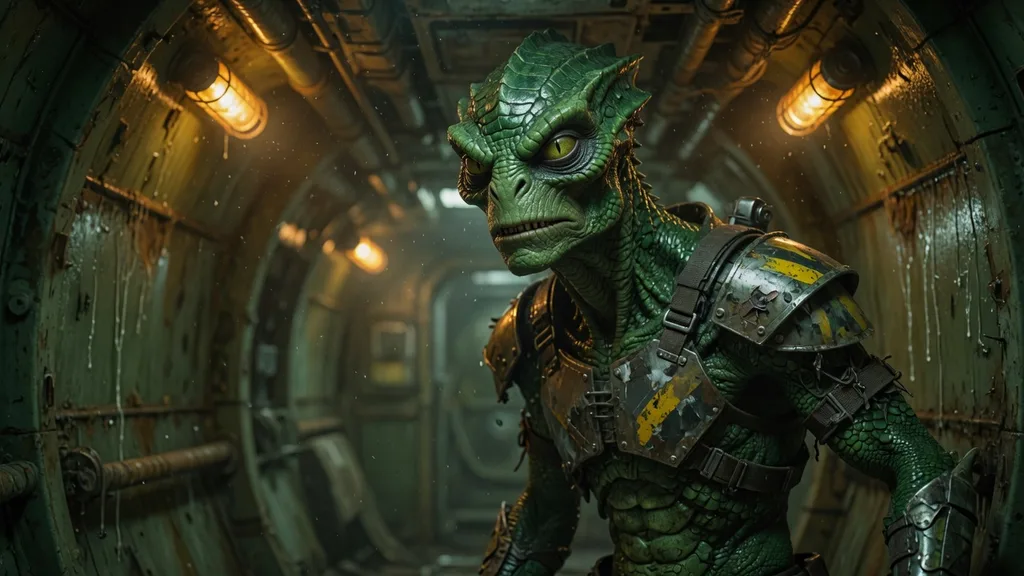
Reptilian. Cold-blooded, patient, ancient. Long sibilants carry it — ss threaded through every syllable, dragged out at the end. Say one slowly and it hisses on its own.
Energy being. No body, no hard edges. The names flow on open vowels and soft l and th sounds, sometimes split by an apostrophe like a held note. They read less like a label and more like a chord.
Grey. The classic abductor from the saucer. Short, blunt, clinical — often a couple of stark syllables with a number bolted on, like a serial more than a name. The flatness is the point; nothing warm survives in there.
Aquatic. Deep-water dwellers, slow and fluid. Rolling consonants and doubled vowels make the names pour — Maelua, Oruna, Luali. They sound like water moving.
Hive. One mind, many bodies. These are designations, not names: a core sound plus a node number or a collective tag — Vesh-Nine, Khor of the Brood. Individuality is borrowed from the swarm, so the name reflects rank, not self.
Turning One Name Into a Whole Species
A single name is easy. Scaling one good name into an entire civilization — with its own sound budget, its own naming customs, and a name for what the species calls itself versus what everyone else calls it — is a bigger job than this page covers. That's exactly what the alien species name generator is built for: it generates a species-level self-name (endonym) alongside the name humans actually use for them (exonym), plus the first-contact story behind the gap between the two.
Example Alien Names
Humanoid & Energy Names
- Vael'ari
- Corin Thal
- Sael'is
- Velis Vrak
- Aelyo'ia
- Lyoth'ae
- Mira'el
- Eoth-Lumen
- Nyris
- Sylua'n
- Thalen
- Ily'ae
- Veneth
- Aeo'ria
- Coril
Insectoid & Reptilian Names
- Zik'kri-tek
- Ssavrass
- Tza'kik
- Hessethss
- Skri-zt
- Vrss'kor
- Kik-rr
- Ssorath
- Tch'azt
- Vra'kssa
- Zree'tik
- Hsstess
- Kss-ka
- Szeliss
- Tek'zree
Grey, Aquatic & Hive Names
- Zr-on-9
- Maelua
- Khorvesh-Prime
- Qel-yx
- Oruna
- Vesh-Nine
- Xen-il
- Lualu
- Drone-Alpha
- Vyr-zo
- Naimo
- Brood-Theta
- Zha-7
- Marli
- Skarn Node
Tips for Choosing an Alien Name
A name carries your species before any description does. These habits keep yours working:
- Say it out loud. If you stumble, your reader will too. A name lives in the mouth, not on the page.
- Match name to biology. A click-name on a creature of light, or a flowing vowel-name on an armored insect, breaks the illusion instantly.
- Use apostrophes once. One reads exotic. Three read like a typo. Restraint is what separates alien from gibberish.
- Vary length across the cast. A short blunt name and a long flowing one in the same scene tell the reader these are different kinds of being.
- Keep a banned list. Decide which Earth-common sounds your species never uses, then never use them. Absence builds identity as much as presence.
- Pick the vibe on purpose. A menacing warlord and a noble envoy should not sound alike. Let the vibe filter set the tone before you commit.
About Alien Names in Fiction
Good alien names are a quiet kind of worldbuilding. They tell the audience how a species thinks before the species says a word. A hive that names by number sees the individual as replaceable. A noble line that stacks honorifics cares about lineage and rank. A reptilian culture whose every name hisses feels old, slow, and unbothered by us.
The best sci-fi treats naming as part of the biology and the politics, not decoration sprinkled on at the end. The sound of a name is a fact about the throat that makes it and the culture that keeps it. Build from that, and your aliens stop being humans in makeup and start being a people — strange, coherent, and impossible to mistake for anyone from here.
An alien name is a promise that the thing wearing it does not come from your world.
FAQ for Alien Name Generator
What makes a name sound alien?
Three things, mostly: sounds humans rarely combine (back-to-back consonants, hissed sibilants, hard clicks), apostrophes or hyphens that imply a glottal stop your tongue isn't built for, and a rhythm that breaks the patterns of Earth languages. The result lands as familiar enough to pronounce, strange enough to feel wrong — that gap is the whole effect.
How do I name an alien species versus an individual?
An individual name is one creature's label — short, said often, easy to remember. A species name covers a whole people and can be heavier and more formal. This generator builds individual names; for a race name, take a strong syllable from a result and add a collective ending like -i, -ar, or -kind.
Where can I use the Alien Name Generator?
Sci-fi writers use it to name alien characters and species fast, tabletop GMs pull NPC names for one-shot encounters, and game developers seed placeholder names for procedural content. It also works for screen names, forum handles, or cosplay OCs — anywhere you want something that reads as unmistakably not-human.
Should alien names use apostrophes?
Sparingly. One apostrophe reads as an exotic glottal stop and adds flavour. Three of them in a four-letter name reads as a parody. The generator places them where the species phonetics call for it — insectoid and energy beings get them more often, greys almost never.
Do the species types actually change the names?
Yes — that's the point. Each species type draws from its own pool of sounds and assembly rules. Insectoids chitter and click, reptilians hiss and drag out sibilants, energy beings flow on long vowels, greys come out short and clinical. Switch the type and the whole texture of the names changes.
What makes alien names in sci-fi so recognisable?
The convention goes back to pulp science fiction and got cemented by shows like Star Trek and Star Wars — writers needed a name a human actor could say on set while still sounding foreign, so they leaned on apostrophes, unusual clusters, and vowel patterns no Earth language uses quite that way. Hear a stray apostrophe next to a hard consonant pileup and you already know the speaker isn't from here. This generator draws on that same shorthand, tuned per species type so it feels specific rather than generic.
Are these names original or copied from movies and games?
Original. The phoneme pools and assembly rules are built from scratch to evoke each archetype without lifting any canon race. You won't get a Vulcan or a Xenomorph — you'll get something new that sits in the same neighbourhood.
Can I use these names commercially?
Yes. The names are procedurally generated combinations, free to use in your novel, comic, tabletop campaign, or game. Run a quick search before you commit a major name, the same as you would for any invented word.