
Planet Name Generator
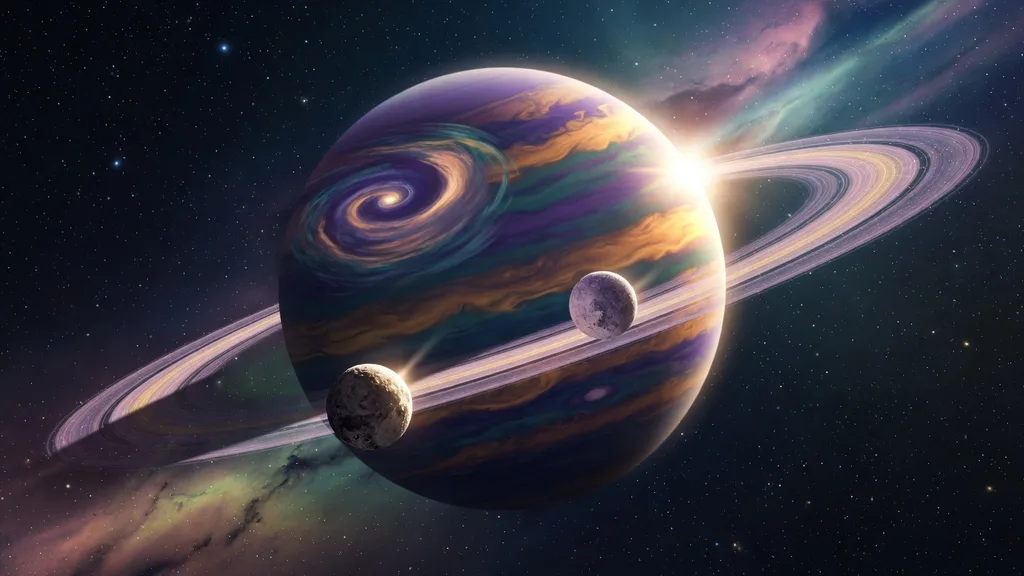
This planet name generator rolls you new worlds, from desert moons to ringed gas giants to rogue planets drifting with no star at all. A desert world shouldn't sound like an ocean world. A gas giant shouldn't sound like a dead rock on the edge of charted space. This generator starts with the kind of planet you're naming — twelve types in total — and builds the sound from there: phoneme pools tuned to each world type, a meaning-carrying flavour line on every card, a setting-aware lore note, and a real-format catalog designation to match.
👇 Click any name to copy it
Pick a planet type, choose whether you want an evocative name or a catalog designation, then set the setting that frames it. Every name lands ready for a star map, a campaign doc, or the first chapter of a story — and it carries implicit information about the world before you've written a word of description.
The right name earns its keep. It tells the reader this is a place of sand and scarcity, or one drowned sea under three moons, or a dead world with no sun to warm it, before anyone reaches the second line.
How to Use This Planet Name Generator
Four choices shape every batch. None of them are decoration — each one changes what lands on the card.
- Planet type is the primary control, and it drives the phonetics. Pick Desert / Arid and you get dry consonants and open vowels in the tradition of Arrakis and Tatooine. Pick Ocean / Water and the names flow like Kamino. Pick Rogue / Starless and they turn cold and stateless — no anchor, no sun.
- Naming style sets the format. Evocative gives you proper nouns a culture would say out loud — Veridia, Khaarun. Catalog designation gives you survey records — XR-7 Tarsis, Kepler-22b — with a real astronomical id. Both mixes them, the way a real star chart mixes named and numbered worlds.
- Setting colours the lore note. Hard sci-fi gives you spectroscopy and orbital data. Space opera gives you faction history and contested claims. The name stays the same; the context shifts.
- Use the slider to pick how many names to roll, then hit Generate. Don't like a batch? Roll again as many times as you want — and click any card to copy it to your clipboard.
Each card also shows a flavour line explaining what the world is actually like, a real-format catalog designation — NGC, HD, Kepler, TESS and the rest — and a setting-aware lore note, all ready to drop straight into worldbuilding notes.
How Real and Fictional Planets Get Named
The naming traditions worth borrowing come from two places: the rules astronomers actually use, and the century of conventions science fiction has invented for itself. Both are baked into the pools above.
How Real Planets Are Named
The International Astronomical Union governs the official naming of planets, moons and other bodies, and the conventions change by body type.
- Solar system planets carry the names of Roman deities — Mercury, Venus, Mars, Jupiter, Saturn, Uranus, Neptune. The tradition runs back to antiquity for the visible worlds and was extended by convention as new ones turned up.
- Dwarf and minor planets pull from mythology more broadly — Pluto, Eris, Makemake, Haumea, Sedna — and the names must be mythological figures the IAU's small-body committee signs off on.
- Exoplanets get designation-style names: the host star's catalog id plus a lowercase letter for orbital order, like Kepler-452b, HD 209458b and TRAPPIST-1e. Informal common names come through occasional IAU naming contests, but the technical designation stays official.
- Moons follow theme-based rules per planet. Jupiter's moons take the names of his lovers and descendants; Saturn's take Titans and giants; Uranus's take characters from Shakespeare and Alexander Pope.
How Fictional Planets Get Named
Science fiction built its own conventions over a hundred years of worldbuilding, and they break from the IAU rules in useful ways.
- Star Wars leans short, punchy and easy to say — Hoth, Naboo, Jakku, Crait — or melodic and multi-syllable, like Tatooine and Coruscant. Memorability comes first. Many names have roots: Coruscant from coruscate, to flash with light; Alderaan from Al Deran, old Arabic astronomy.
- Star Trek goes more technical and latinised — Vulcan, Romulus, Cardassia, Bajor, Qo'noS — fitting its grounded read on alien cultures as analogues of real ones. Klingon names in particular carry a harsh signature that signals aggression.
- Dune gives us Arrakis, a name that echoes the Arabic word for dance (raqs) filtered through a far future where Arabic culture has persisted and mutated. The choice is deliberate and political — and it extends past the planet's name into the people on it, which the Dune name generator covers on its own, with the Fremen, Great House and Bene Gesserit naming registers this page doesn't touch.
- The Culture takes another road entirely: worlds get named by the AIs that catalogue them, so the names run long, ironic or flatly descriptive — Prasadal, Pittance, Vavatch Orbital.
Planet Types and Their Naming Traditions
Type is the heaviest lever in the generator, and this is the widest set of world types you'll find on a free planet name generator — twelve, not the usual four or five. Here's the reasoning behind each pool, use it as a quick reference when you're picking a type above.
| Planet type | Vibe | Example |
|---|---|---|
| Desert world | Dry consonants, open vowels, heat and scarcity | Khaarun |
| Ocean world | Liquid sounds, vowel-rich, movement and depth | Thalassa |
| Gas giant | Grand, deific roots scaled to the object | Joviter Major |
| Ice world | Crystalline clusters, stark and final | Cryon |
| Jungle world | Lush, layered, overgrown and loud | Itheloria |
| Volcanic world | Forge-heat, sulfur, hard guttural edges | Pyrathar |
| Barren world | Blunt, airless, cratered and dead | Cravus II |
| Terran world | Warm, habitable, almost too perfect | Veridia |
| Toxic world | Harsh chemical roots, corrosive and hostile | Venthos Blight |
| Ringed world | Wide, circular roots, a halo built into the name | Coronath Ring |
| Rogue planet | Cold, stateless, no anchor and no sun | Umbrath Drift |
| Tidally-locked world | Twin-faced roots, split between day and night | Janusith Dayside |
Desert Worlds
The desert planet is science fiction's most iconic biome — defined by Arrakis, reinforced by Tatooine and Jakku. The names favour open vowels and hard consonants that suggest heat, scarcity and ancient geology: Ar-, Dun-, Kha-, Sar-, Tar-. The tradition borrows from Arabic, Berber and other North African and Middle Eastern languages, a choice the genre keeps returning to. Conscious worldbuilding either engages with that tradition or deliberately subverts it.
Ocean Worlds
Water world names flow. They favour liquid consonants — L, M, N, R — and vowel-rich syllables that suggest movement and depth: Thalassa, Kamino, Aquaris. Many draw on Greek and Latin roots for water: thalass- (sea), aqua-, pelag- (open sea), nereid (sea nymph). The real solar system's ocean candidates — Europa, Enceladus, Ganymede, Titan — follow the mythological moon-naming theme.
Gas Giants
Gas giant names should feel grand. These are the largest objects in any system, and the name should carry matching weight. The classical tradition reaches for the most powerful deities — Jupiter, king of gods; Saturn, time and harvest; Uranus, sky; Neptune, sea. Fictional gas giants usually keep that logic, scaling the name to the scale of the world.
Ice Worlds
Ice planet names benefit from hard consonants in unusual positions — clusters that read as crystalline and precise: Cryo-, Gla-, Nim-, Rhy-, Sil-. The tradition includes Hoth, short and stark and final, and the real solar system's icy outer bodies: Pluto, Eris, Sedna, Makemake — names drawn from cold mythologies and distant cultures.
Jungle, Volcanic, Barren and Terran Worlds
The rest of the core pools follow the same logic. Jungle worlds run lush and layered, their names long and overgrown. Volcanic worlds take forge-heat and sulfur — hard, guttural, built around the calderas. Barren worlds get blunt, final names that read like epitaphs: short, cold, describing an absence. Terran worlds lean warm and habitable, names a colony ship would be glad to reach — and four flags would fight to plant.
Toxic Worlds
A toxic world is hostile at the atmosphere level, not just the surface — the air itself is the threat, whether that's sulfuric acid clouds, chlorine haze or something with no name yet. Venus is the real-world reference point: a crushing, corrosive atmosphere hot enough to melt lead, closer to a toxic world than to anything habitable. Names in this pool lean on harsh, chemical-sounding roots — Ven-, Tox-, Acid-, Phos-, Chl- — with endings that hiss or burn: Venthos, Toxaris, Corrosia.
Ringed Worlds
A ringed world builds its identity around the halo, not just the body. All four gas giants in our own solar system carry rings — Saturn's are simply bright enough to see from Earth, while Jupiter, Uranus and Neptune have fainter systems. Astronomers have also found ring evidence around smaller bodies, like the centaur Chariklo, and suspect some exoplanets carry ring systems far larger than anything nearby. Names here reach for wide, circular roots and ring-coded suffixes — Coronath, Annulon, Halowyn Ring — because a name that doesn't nod to the rings undersells the planet's best feature.
Rogue Planets
A rogue planet — sometimes called a free-floating planet, or informally a "starless" or "orphan" planet — has no star to orbit. Some formed in a system and were flung out by gravitational interactions with other planets; others may have formed alone in the dark, condensing straight out of a collapsing cloud without ever joining a solar system. Astronomers have found real candidates through microlensing surveys, which catch the gravitational bend of light as an unseen mass drifts past a background star. Names here draw on drift, exile and void roots — Noctath, Wanderis, Umbrel Drift — because the defining fact about a rogue planet is what it doesn't have: a sun.
Tidally-Locked Worlds
A tidally-locked planet always shows the same face to its star, exactly the way the Moon always shows the same face to Earth. One hemisphere sits in permanent day, the other in permanent night, and habitability — if there is any — usually clusters in the narrow twilight band between them, sometimes called the terminator zone. This isn't a fringe idea: it's the expected outcome for most planets found orbiting close to red dwarf stars, including several of the TRAPPIST-1 system's worlds. Names here split the difference — Janusith, Duskara, Half-Dawn — echoing Janus, the two-faced Roman god, or simply tagging a dayside/nightside suffix onto the root.
Planet Names by Setting
The type filter shapes the sound; the setting you're writing in shapes what the name has to do for the reader. Here's how each of the big sci-fi and fantasy settings treats planet names, and where to go if you need the full generator for that universe.
Sci-Fi and Hard Sci-Fi
Hard sci-fi wants names that could plausibly appear in a survey log: catalog designations, spectroscopy notes, gravity readings. Set the Setting filter above to Hard sci-fi and Naming style to Catalog designation for a batch that reads like it came off a real telescope array. If your sci-fi story leans further into aliens and first-contact worlds, the alien name generator covers the species and characters that might live there.
Fantasy and Space Opera
Space opera and fantasy sci-fi want the opposite: names with weight and history, homeworlds people would die defending. Set Setting to Space opera and Naming style to Evocative. If the story is set on the ground rather than in orbit, the fantasy continent name generator covers landmasses, kingdoms and regions on a single world.
Star Wars-Style Planets
Star Wars planet names run short and punchy (Hoth, Crait) or melodic and multi-syllable (Coruscant, Alderaan), almost always evocative rather than catalog-style — nobody in that galaxy calls Tatooine "KX-4." Set Naming style to Evocative and lean on Desert, Jungle or Terran types for that read. Naming a specific character or ship instead of a world? Try the dedicated Star Wars name generator.
Warhammer 40,000-Style Worlds
40k planets tend to carry grim, functional or Latinised names — hive worlds, forge worlds, death worlds — often paired with sector or fleet designations. The Barren, Volcanic and Toxic types here get closest to that register, especially with Naming style set to Catalog designation for a sector-code feel. For full 40k faction and character names, use the Warhammer 40k name generator.
Planet Name Meanings and Roots
A planet name generator with meanings shouldn't just hand you a string of syllables — it should show you why that string sounds right for the world attached to it. Every pool above is built from roots chosen for what they suggest, and the table below breaks out the ones doing the most work, so you can reuse the logic even when you're naming a world by hand.
| Root | Meaning / origin | Shows up in |
|---|---|---|
| Thalass- | Greek for "sea" | Thalassa, ocean-world names |
| Aqua-, Pelag- | Latin/Greek for "water", "open sea" | Aquaris, Pelagine |
| Pyr-, Ign- | Greek/Latin for "fire" | Pyrathar, volcanic-world names |
| Cry-, Gla- | Greek/Latin roots for "cold" and "ice" | Cryon, Glacius |
| Tox-, Acid-, Phos- | Toxin, acid and chemical roots | Toxaris, Venthos |
| Corona-, Annul- | Latin for "crown" and "ring" | Coronath, Annulon |
| Umbra-, Noct- | Latin for "shadow" and "night" | Umbrath, Noctath Drift |
| Janus-, Dusk-/Dawn- | Two-faced Roman god; light-cycle roots | Janusith, Duskward names |
| Raqs (Arabic) | "To dance" — echoed in Dune's Arrakis | Arrakis (real fictional example) |
| Coruscate (Latin) | "To flash with light" | Coruscant (real fictional example) |
This is interpretive etymology built for worldbuilding, not a claim that every generated name traces to an attested ancient word — but the sound-to-meaning mapping is deliberate throughout, the same way real conlangers and worldbuilders work backward from meaning to phonetics.
Real Exoplanet Designations
If you want your world to read as freshly charted rather than long-settled, borrow the real exoplanet naming format directly. Every confirmed exoplanet gets a designation built from its host star's catalog identifier plus a lowercase letter marking discovery order: b for the first planet found in that system, c for the second, and onward. Kepler-22b, HD 209458b and TRAPPIST-1e all follow this rule exactly — the star's own catalog code (Kepler, HD, TRAPPIST) never changes, only the letter does.
Common survey prefixes you'll see on real exoplanets — and in the catalog designations this generator produces — include Kepler and K2 (NASA's Kepler space telescope missions), TESS and TOI (the Transiting Exoplanet Survey Satellite and its objects of interest), HD and HIP (older Henry Draper and Hipparcos star catalogs), and WASP and HAT (ground-based transit survey networks). Set Naming style to Catalog designation above to pull straight from this format.
Example Planet Names
Cool made-up planet names, grouped by world type, straight off the pools above — no filter required if you just want a ready-made list of fake planet names or planet name ideas. Copy one as-is, or roll the generator for a fresh batch tuned to your setting.
Desert Worlds
- Khaarun
- Tarosk
- Sandrix
- Vorath
- Drakush Prime
- Kargen
- Saroon
- Dunash
- Malik
- Skorath
Ocean Worlds
- Thalassa
- Marella
- Nereion
- Aquaris
- Pelagine
- Kalonia
- Issira Deep
- Corael
- Velira
- Syrana
Ice & Frozen Worlds
- Cryon
- Glacius
- Rhyith
- Nimar Frost
- Silyx
- Borath
- Kelin
- Frigeth
- Hypax
- Nivar Zero
Gas Giants & Terran Worlds
- Joviter Major
- Kronos Prime
- Thoreus
- Aegonis
- Celeal
- Veridia
- Caelara
- Terradia Haven
- Elysia
- Auroria
Toxic Worlds
- Venthos Blight
- Toxaris
- Corrosia
- Phosgar Null
- Acidara
- Chloranis
- Miasmor
- Blyssen
- Fluvenn
- Iodyx
Ringed Worlds
- Coronath Ring
- Annulon
- Halowyn Halo
- Sattira Crown
- Vellorin Rings
- Zoranis Diadem
- Brannora
- Thrennith
- Perinax
- Diadeth
Rogue Planets
- Noctath Drift
- Umbrel Wanderer
- Wanaris Exile
- Voidith Lost
- Erranus
- Vagrath
- Severine Unbound
- Loameth
- Zethara
- Strajon Drift
Tidally-Locked Worlds
- Janusith Dayside
- Duskara Terminator
- Dawnith Duskward
- Half-Aurax
- Bilumar
- Solstyx
- Gemelith Janus
- Terminor
- Cresceth
- Equinar
Catalog Designations
- XR-7 Tarsis
- Kepler-4471c
- HD 209b Mira
- NS-22 Vorath
- TOI-3380b
- NGC-7741-d
- VG-19 Cryon
- Gliese 884c Pelin
- TESS-5512
- KX-3 Drakar
Evocative Names vs Catalog Designations
The naming style filter is the difference between a place people live and a place a survey ship just logged. Both have their use, and a good star map carries both.
Evocative names read like proper nouns — Veridia, Tharossa, Khaarun. They belong to worlds with a history, a population, a name passed down in some local tongue. Reach for them when the planet matters to the story: a homeworld, a capital, a battlefield people remember by name.
Catalog designations read like records — XR-7 Tarsis, Kepler-22b, HD 4471c. They fit hard sci-fi, frontier surveys and any world that's been charted but never settled. A designation tells the reader nobody's lived here long enough to give it a real name yet. That gap is itself a piece of worldbuilding.
| Setting | Best style | Why it fits |
|---|---|---|
| Hard sci-fi | Catalog designation | Survey data, real astronomical ids, worlds logged before they're named |
| Space opera | Evocative | Homeworlds and capitals with deep history and contested claims |
| Frontier / exploration | Both | A mix of named worlds and fresh designations, like a working chart |
| Military sci-fi | Catalog designation | Sector codes and grid markers read as operational, not poetic |
Tips for Naming Your Planet
- Start from the type, not the sound. Decide what the surface or atmosphere does to a visitor first — kills them, feeds them, freezes them — then pick syllables that match. A name chosen before the world exists usually clashes with it later.
- Keep it sayable out loud. If a name trips a reader up in dialogue, it'll trip them up every time it recurs. Three syllables or fewer for anything that gets said often; save the long, layered names for background worlds mentioned once.
- Match the register to the setting. A grim military campaign doesn't want a world called Elysia any more than a cosy space-opera romance wants one called Blightscar. Pull the setting filter toward what the story actually feels like.
- Use the catalog format for anything unclaimed. A world nobody's settled yet doesn't need a proper noun — a designation like TOI-3380b tells the reader that fact without a line of exposition.
- Don't over-explain the name in text. Let the sound do the work. If a name needs a paragraph of justification the first time it appears, it's probably fighting the story instead of serving it.
- Reuse suffixes sparingly across a cast of worlds. If every planet in your system ends in "-ia" or "-us," the map starts to blur. Mix styles — some evocative, some catalog — the way a lived-in universe actually would.
About Naming Planets
A planet name is the first piece of worldbuilding anyone meets for a location, and it sets every expectation that follows. Before you describe the storms, the cities or the war over the orbital lanes, the reader has already read the name — and decided, half consciously, what kind of place this is. That's why the choice carries weight out of proportion to its length.
The strongest sci-fi planet names do phonetic work that matches the world. Arrakis sounds like sand grinding on sand. Hoth sounds like a door closing on the cold. Coruscant shimmers. None of that is accident — it's sound engineered to carry meaning. The pools in this generator are tuned the same way, so the name arrives already pointing at the world behind it, whether that world has a sun to orbit or not.
Charting a frontier for a hard-science novel or naming the throneworld of a fallen empire, start with the type, pick the style that fits the role, and let the setting frame the rest. A good planet name is a promise about the place — keep that promise and the world feels real before you've described a single horizon.
FAQ for Planet Name Generator
What makes a good planet name for a sci-fi story?
A good planet name is pronounceable, memorable, and does phonetic work that fits the world. Desert planets should sound arid, ocean worlds should flow, gas giants should feel grand. The name is the first piece of worldbuilding a reader meets for that location, so it should carry a hint of what kind of place this is before any description starts.
Where can I use the Planet Name Generator?
It works for sci-fi novels and short stories, tabletop and video game campaigns, star maps and worldbuilding wikis, and any project that needs a world named before the plot arrives. Every name is generated algorithmically rather than pulled from an existing franchise, so the results are free to use in published or commercial work.
What is the difference between an evocative name and a catalog designation?
An evocative name reads like a proper noun a culture would actually use — Veridia, Tharossa, Khaarun. A catalog designation reads like a survey record: a real-format astronomical identifier such as Kepler-22b or HD 4471c, sometimes paired with a short field code like XR-7. Pick evocative for places people live, catalog for newly charted worlds and hard-science settings.
How do real exoplanets get their names?
Most exoplanets carry only a catalog designation: the host star's identifier plus a lowercase letter for orbital order — b for the first found, c for the second, and so on. Kepler-452b, HD 209458b and TRAPPIST-1e all follow that rule. The IAU runs occasional naming contests for approved common names, but the technical designation stays official.
How does the planet type filter change the name?
Type drives the phonetics. Each world type draws from its own pool of syllables — desert worlds get dry consonants and open vowels, ocean worlds get liquid sounds and vowel-rich endings, ice worlds get crystalline clusters, gas giants get weighty deific roots, toxic worlds get harsh chemical-sounding roots. Switch the type and the whole sound of the batch shifts.
Does this planet name generator show meanings?
Yes. Every card carries a flavour line tied to the world type — what the surface or atmosphere is actually like — plus a setting-aware lore note. The naming-tradition tables further down break out the actual sound-to-meaning roots (thalass- for sea, pyr- for fire, cry- for ice) so you can see why a name reads the way it does, not just that it sounds nice.
What does the setting filter do?
Setting colours the lore note under each name, not the name itself. Hard sci-fi gives you spectroscopy, orbital periods and gravity readings. Space opera gives you faction history, lost civilisations and contested claims. The same world reads as a survey target or a war prize depending on which you pick.
What is a rogue planet?
A rogue planet — also called a free-floating planet — has no host star. It formed in a system and got flung out, or never had one, and now drifts through interstellar space in permanent dark and cold. Astronomers have found real candidates via microlensing surveys. The Rogue / Starless type here builds names around drift, exile and dark, starless roots.
What is a tidally-locked planet?
A tidally-locked world always shows the same face to its star, the way our Moon always shows the same face to Earth. One side bakes in endless day, the other freezes in endless night, with a narrow twilight band between them. It's a real and common outcome for planets orbiting close to red dwarf stars — several TRAPPIST-1 planets are thought to be tidally locked. The Tidally-locked type here leans on dayside/nightside, twin-faced roots.
Can planets really have rings?
Yes — all four gas giants in our own solar system (Jupiter, Saturn, Uranus, Neptune) have ring systems, Saturn's just being the most visible. Rings form from debris, shattered moons or leftover material that never accreted into a body. Some exoplanets are suspected of far larger ring systems than anything in our system. Pick Ringed for a world defined by its halo.
Can I get a straight list of made-up planet names instead of using the tool?
Yes — the Example Planet Names section further down groups dozens of ready-made names by world type, so you can copy one straight off the page without touching a filter. The generator above is there for when you want more, or want to lock in a specific type and setting first.
Can I use these names in my novel, game, or campaign?
Yes. Every name is assembled algorithmically and free to use for any creative project. The pools are tuned to evoke familiar sci-fi traditions without copying trademarked planets or settings, so the output is original and safe for published work.