Lord of the Rings Name Generator
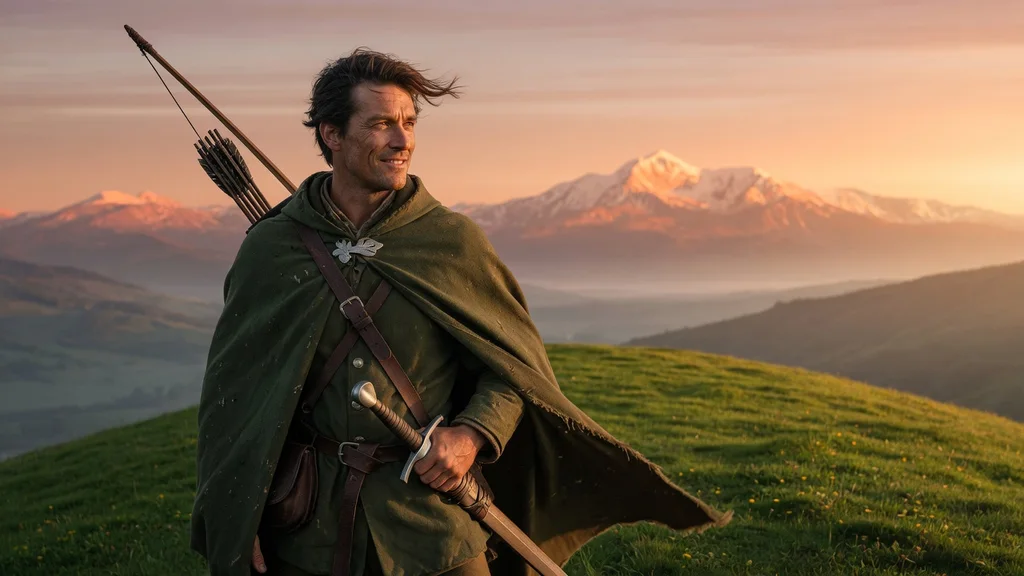
This Lord of the Rings name generator crafts original, Tolkien-style names by race. There's a reason Tolkien's names stick with you. Each one sounds exactly like the person it belongs to, because he wasn't picking sounds at random — he was working with real constructed languages, each with its own phonetic rules and cultural logic. This generator tries to respect that. Pick a race, an era and a tone, and you'll get names that feel like they belong in Middle-earth, not just random syllables with an apostrophe thrown in.
👇 Click any name to copy it
A good Middle-earth name does work before your character says a word. It signals where they come from — the misty halls of an Elven refuge, a horse-lord's feast-hall, a snug Shire burrow, a deep Dwarven mansion under the mountains. The right name plants your hero in the world. The wrong one yanks the reader straight out of it.
This is a fan tool, and every name it makes is original. Nothing here is copied out of the books. What you get is the sound of Tolkien's languages, recombined into names that could have belonged to someone he simply never wrote about.
How to Use Lord of the Rings Name Generator
Race is the most important filter, and it's worth a moment's thought. There's a wide gulf between a Sindarin Elf — the Grey Elves of the woodland realms and hidden valleys — and a Quenya High Elf, whose ancient ancestral tongue belongs to ceremony and the oldest of the Noldor. Both are Elvish, but they sound nothing alike and signal completely different things about who your character is.
The same holds for Men. Rohirrim names are essentially Old English — Tolkien transliterated Anglo-Saxon for them, and that's a feature. Gondorian names lean Sindarin and formal, more stone than forest. Dúnedain Rangers share that stock but wear it weathered and austere. And Bree-landers are just plain, sensible, English-country folk who happen to live next door to Hobbits.
Gender and Name let you choose male or female roots and whether you want a full name (with a surname, for Hobbits) or a single first name. Tone nudges results toward Noble, Warrior, Wise, Humble or Shadow, sometimes adding an epithet like the Grey or Oathbreaker for flavour. Era adds a short lore note — a reminder of what was happening in Middle-earth when your character might have lived. Each card also shows a rough meaning, because Tolkien almost always named his people for a reason.
Set the slider for how many names you want, then hit Generate. Don't like a batch? Roll again as often as you like, and click any card to copy it to your clipboard.
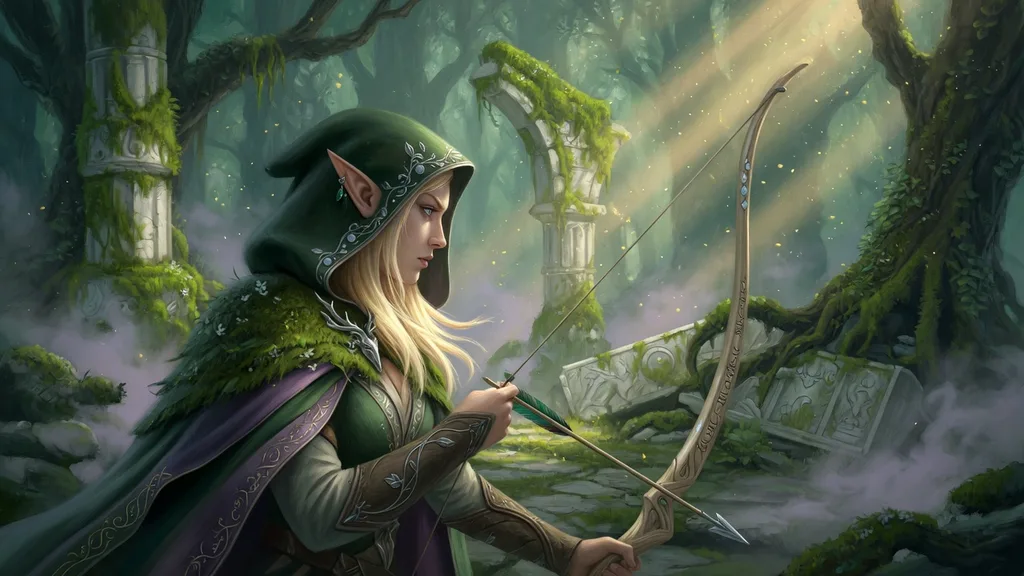
The Races of Middle-earth — Naming Traditions
Every people in Middle-earth names its children differently, and the differences run deep. Here's how each tradition sounds, and why — so the race you pick in the generator above lands the way you want it to.
Sindarin Elves
Sindarin is the working language of Third Age Elves — the tongue of hidden valleys and golden woods. Tolkien modelled it on Welsh, and it shows: soft mutations, liquid consonants, clusters of ae, ei and oe. It's the Elvish that sounds lyrical rather than formal. Sindarin names favour compound words with transparent meanings — they describe the person, their lineage, or the circumstances of their birth. You don't need the grammar to use one. You just need it to sound right.
Quenya — High Elven
By the Third Age, Quenya is basically Latin: an ancient prestige language used in ceremony, lore, and by the oldest Elves who still remember the Blessed Realm. Quenya names run longer and more formal, with open vowels and stately endings — -ë, -iel, -nor, -rë. There's a grandeur to them that Sindarin doesn't reach for. If your character is very old, very noble, or from one of the great houses, Quenya is the right call. If they're just an Elf in the woods shooting arrows at things, Sindarin.
Rohirrim
This is the tradition I love most, honestly. Tolkien didn't invent a separate language for the Riders — he used Old English and said "assume this is translated." So every Rohirrim name is a real Anglo-Saxon word with a real meaning, and the results are extraordinarily expressive. The Riders don't name things subtly; they name them accurately, and then the named thing goes and becomes exactly what it says. You're not assembling random sounds — you're essentially writing a two-word character description.
Gondorian / Númenórean
Gondor is the civilization that had time to get complicated. Its names blend Sindarin influence, inherited from the Elves its people revered, with older Númenórean roots Tolkien based partly on Semitic structures. The result is more architectural than Sindarin — less forest, more carved stone. Notice how many Gondorian names end in strong consonants or -ion, -ond, -orn suffixes. They carry weight. They sound like they were chiselled into a wall.
Dúnedain
The Rangers of the North are Gondorian by blood, Sindarin by name, and weathered by some three thousand years of fading glory. Their names share the same linguistic stock as Gondor's, but there's something more austere about them — names that survived the fall of a northern kingdom and kept being passed down anyway. The Dúnedain are perfectly capable of carrying the weight of their heritage. They just don't always announce it.
Hobbits
Hobbits name their children the way sensible English country folk do: pleasantly, without fuss, with a strong pull toward family tradition. First sons often get family names as first names. Women get flowers, jewels and virtues. The surnames are where Hobbits get creative — compound words that are slightly absurd in a completely straight-faced way. Tolkien clearly had enormous fun with Hobbit surnames, and so should you. And there's no pressure here for a name to sound epic. The plainness is the charm.
Dwarves
Tolkien modelled Khuzdul, the secret language of the Dwarves, on Semitic languages — short, consonant-heavy, built on triconsonantal roots. The Dwarf names that surface in the tales are the public names Dwarves share with outsiders, not their true names, which they guard carefully. Many of those public names were drawn from Norse poetry, the same source that gave Tolkien a certain wandering wizard. A good Dwarf name is blunt, hard and forged to last. Female Dwarf names are famously scarce in the source material — this generator builds them from the same roots as the male ones, with different endings, because they deserve the attention.
Ents
Entish takes a very long time to say anything. The Ents describe themselves by everything that has happened to them and everything they've witnessed — an Ent's name is a personal history compressed into sounds, and the full version can take the better part of a day. What others use is the abbreviated nickname. This generator builds compound nature-word names that gesture at that tradition without actually taking three days.
Orcs
Orc names are guttural, harsh and functional. No poetry, no hidden meaning beyond this is what they're called. The sounds are blunt and ugly on purpose — short, snarling syllables that fit creatures bred in the dark. If you're naming an Orc, you probably already know the register you want. This generator delivers it.
Lord of the Rings Names by Race
Race is the dial that changes everything — the syllables, the rhythm, the whole feel of the name. Use this table as a quick reference when you pick a race in the generator above. The examples are original, generated names, not characters from the books.
| Race | Name feel | Example |
|---|---|---|
| Sindarin Elf | Lyrical, liquid, Welsh-tinted | Celebrin |
| Quenya / High Elf | Ancient, formal, open vowels | Aranwë |
| Silvan / Wood Elf | Simpler, close to the forest | Legthon |
| Rohirrim | Old English, blunt and true | Théomund |
| Gondorian | Formal, stony, carved weight | Denethmir |
| Dúnedain / Ranger | Weathered, austere, old | Arandir |
| Bree-lander | Plain, sensible, English | Robford |
| Hobbit | Warm, homely, slightly absurd | Bilbo Brandybody |
| Dwarf | Short, hard, consonant-heavy | Dwargrim |
| Ent / Tree-name | Compound nature-words, slow | Oakwarden |
| Orc / Uruk | Guttural, brutal, functional | Grishnakh |
Tolkien's Languages — The Short Version
Tolkien invented over a dozen languages in his lifetime. For naming purposes, a handful matter:
- Sindarin — the everyday Elvish of the Third Age, Welsh-influenced. This is what most people mean by "Elvish."
- Quenya — the ancient High Elven tongue, Latin- and Finnish-influenced, used in ceremony and by very old, very serious Elves.
- Khuzdul — the Dwarvish language, Semitic-influenced and secret. The names Dwarves use in public aren't technically Khuzdul at all.
- Rohirric — not invented. Just Old English, standing in as a "translation" so the Riders sound like Anglo-Saxons.
- Black Speech — the dark tongue. Not pleasant. Don't name your hero in it.
This generator doesn't claim to be a Sindarin parser or a substitute for the appendices. It's a starting point — a fast way to get a name that sounds right, which you can then make your own.
Example Middle-earth Names
Original, generated names grouped by race — a sense of what each setting on the generator produces.
Elven Names (Sindarin, Quenya, Silvan)
- Celebrin
- Mithriel
- Aranwë
- Galadúr
- Nimloth
- Legthon
- Elrunir
- Saelwen
- Faelorn
- Tárinyë
- Glindir
- Aerlas
Names of Men (Rohirrim, Gondor, Dúnedain, Bree)
- Théomund
- Éowyld
- Denethmir
- Aranril
- Arandir
- Vorondel
- Robford
- Hamley
- Wulfhelm
- Ciramir
- Brytwine
- Maeril
Hobbit Names
- Bilbo Brandybody
- Droco Tookhill
- Marigold Goodbottom
- Hamwise Burrows
- Primrose Sandheaver
- Tobold Boffin
- Pippin Longshank
- Pansy Leafrose
Dwarf, Ent & Orc Names
- Dwargrim
- Náindin
- Bofbur
- Drísa
- Oakwarden
- Mossheart
- Fernsong
- Grishnakh
- Grukruk
- Mogûl
- Brakrat
- Lugnash
About Middle-earth Names
What makes a Tolkien name work is consistency. Within a single culture, the sounds rhyme with each other — the same vowels recur, the same kinds of endings, the same weight. That internal logic is why Galadriel and Celeborn feel like they belong to the same world, and why a name built from the wrong syllables sticks out instantly. This generator keeps each race's pool separate so the names it makes stay true to their source.
Meaning matters too. Tolkien rarely named a character at random — names carry a description, a lineage, an omen. That's why every card here shows a rough meaning. It won't be a dictionary translation, since these are original combinations, but it gives you the same kind of hook the real names have: something to point to when a reader asks what it means.
Use it however you like. Roll a name for a tabletop hero, a fan-fiction lead, a homebrew Elf lord or a passing Bree-lander at the inn. A Middle-earth name is a small promise about who your character is — and the right one keeps that promise the moment it's spoken.
The Lands of Middle-earth
FAQ for Lord of the Rings Name Generator
Is this a fan tool, and are the names canon?
This is an unofficial fan tool, not affiliated with the Tolkien Estate or any rights-holder. Every name it builds is an original combination — it borrows the phonetic feel of Tolkien's languages (Welsh-tinted Sindarin, Old English Rohirrim, Semitic-rooted Khuzdul) but does not reproduce names from the books. You won't find canon characters here.
Where do Lord of the Rings names come from in Tolkien's world?
Middle-earth names grow out of the languages Tolkien built before the stories were ever written. Each culture has its own tongue and its own naming logic — Sindarin and Quenya for the Elves, Khuzdul for the Dwarves, Old English standing in for the Rohirrim — so a name quietly signals where its bearer belongs across thousands of years of invented history. This tool borrows that same phonetic logic to build fresh Lord of the Rings names that sit inside the tradition without copying a single canon character.
What's the difference between Sindarin and Quenya?
Sindarin is the everyday Elvish of the Third Age — relatively common, the tongue of Rivendell and the woodland realms, modelled on Welsh. Quenya is the ancient prestige language, archaic and ceremonial, used by the oldest and most powerful Elves. Think of Quenya as Latin and Sindarin as a living language descended from it.
Why do the Hobbit names sound so ordinary?
Because they're meant to. Tolkien deliberately set the Hobbits' very English, very plain name-sense against the lofty names of Elves and kings. First names are warm and homely, surnames are compound and slightly absurd in a completely straight-faced way. The contrast is the point.
Where can I use the Lord of the Rings name generator?
Anywhere you need a Middle-earth name. It suits tabletop campaigns, fan fiction, cosplay personas, character sheets for a homebrew Tolkien-adjacent world, usernames with a bit of Elvish flair, or a story you're only just beginning to sketch. Because the names are original rather than lifted from the books, you can use them freely — the only line to hold is not selling anything under Tolkien's own protected names.
Can I use these names in a TTRPG campaign or fan fiction?
Yes. They work well for tabletop campaigns with a Tolkien-adjacent setting, for fan fiction, or any homebrew world that wants Middle-earth flavour. Since the names are original and not trademarked terms, you're free to use them — just don't sell anything using Tolkien's actual protected names.
How is each race's sound built?
Each race draws on a different pool of syllables tuned to its real linguistic model. Rohirrim names use Anglo-Saxon roots, Dwarven names lean consonant-heavy and short, Elvish names favour liquid consonants and open vowels, and Orc names stay guttural and blunt. Pick a race and the generator chooses syllables that fit.
Can female Dwarves have proper names?
Absolutely — and they deserve more than the source material gives them. The generator builds female Dwarf names from the same consonant-heavy roots as the male ones, with slightly different endings, so they sound unmistakably Dwarvish without being recycled male names.