Avatar Name Generator — Water, Earth, Fire & Air Nation Names
This Avatar name generator builds names the way Avatar: The Last Airbender actually built them — nation by nation, each rooted in a real-world culture rather than one generic "fantasy Asia" blender. Pick a nation (Water Tribe, Earth Kingdom, Fire Nation, or Air Nomads), an era (Aang or Korra), a gender, and whether you want a bender or a non-bender, and it hands back a name with the right title attached — Master, Chief, Fire Lord, Sifu, or, rarely, Avatar.
👇 Click any name to copy it
Every result comes with a nation badge, a title where one applies, and a short lore caption grounded in that nation's culture. Switch the era to Korra and the generator leans toward the lightly blended, Republic-City-style names the later series is known for, without abandoning the four real source patterns underneath.
Every name here is an original construction, checked against a list of canon characters so none of them ever slip out as generator output. This site is not affiliated with, sponsored by, or endorsed by Nickelodeon or Paramount — see the FAQ below for the full disclaimer.
A Note on Avatar: The Last Airbender vs. Avatar (Pandora)
Two very different franchises share the word "Avatar," and the mix-up happens constantly in search results. This page covers Avatar: The Last Airbender and its sequel series The Legend of Korra — the Nickelodeon-animated world of Aang, Katara, and the four bending nations. It has nothing to do with James Cameron's Avatar film franchise, set on the alien moon Pandora with the blue-skinned Na'vi and their own real constructed language. If you landed here looking for Neytiri, Jake Sully, or Pandora-style names, head to the Na'vi name generator instead — this page is Airbender-only.
Why the Four Nations Actually Sound Different
Most "anime-adjacent" name generators treat every East Asian-inspired name the same way — one big undifferentiated pool of syllables. Avatar: The Last Airbender doesn't work that way, and neither does this generator. The show's writers and language consultants gave each of the four nations its own real cultural root, and those roots produce genuinely different-sounding names. Getting that distinction right is the whole edge this generator leans on.
Avatar Naming Conventions — What Makes Each Nation Sound Right
This is the part most quizzes and generators skip. Each nation's names lean on a specific real-world naming tradition, and knowing which one explains why a name "feels" right for that nation before you've consciously worked out why.
Water Tribe: Inuit and Arctic-Inspired Names
Water Tribe names draw on Inuit and broader Arctic Indigenous naming, both in the Northern and Southern Water Tribes and in the Foggy Swamp offshoot. Canon names like Katara, Sokka, Hakoda, Kanna, and Pakku carry the sound patterns of real Inuktitut and related languages — compact syllables, hard consonants softened by long vowels, and codas that often close on a nasal or a stop. This isn't an "exotic" flourish; it's a respectful nod to a specific, living culture with its own real naming practices, and the generator's Water Tribe pool is built to echo that pattern rather than caricature it.
Earth Kingdom: Chinese-Inspired Names
The Earth Kingdom is the largest and most varied nation on the map, and its names lean on Mandarin Chinese naming conventions — crisp, mostly two-syllable constructions built from single meaningful sounds strung together, the way Toph, Bumi, Suki, and Long Feng are all built. Because the Earth Kingdom spans everything from Ba Sing Se's inner ring to small farming villages, its names carry the widest range of any nation in the show, and this generator's Earth Kingdom pool mixes syllable lengths for the same reason.
Fire Nation: Japanese-and-Chinese-Inspired Names
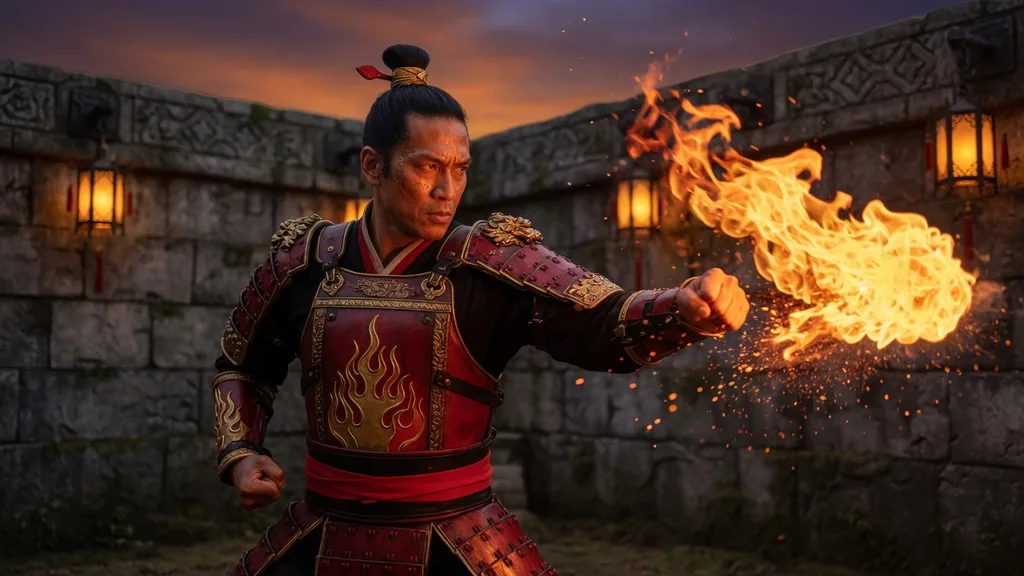
Fire Nation names blend Japanese and Chinese influence into something sharper and harder-edged than the Earth Kingdom's — think Zuko, Azula, Iroh, and Ozai, all built on harder consonant clusters (z, sh, ts) and punchier syllables. That harder sound isn't an accident: the Fire Nation is written as the aggressor of the series, and its name patterns are tuned to sound more clipped and militaristic than its neighbors'. The nation's armor design and rigid military hierarchy also echo real-world East Asian warrior traditions — if that martial angle is what you're actually after rather than a bending nation, the samurai name generator covers the real historical naming system (clan, rank, and a name that changed across a lifetime) behind that aesthetic.
Air Nomads: Sanskrit-and-Tibetan-Inspired Names
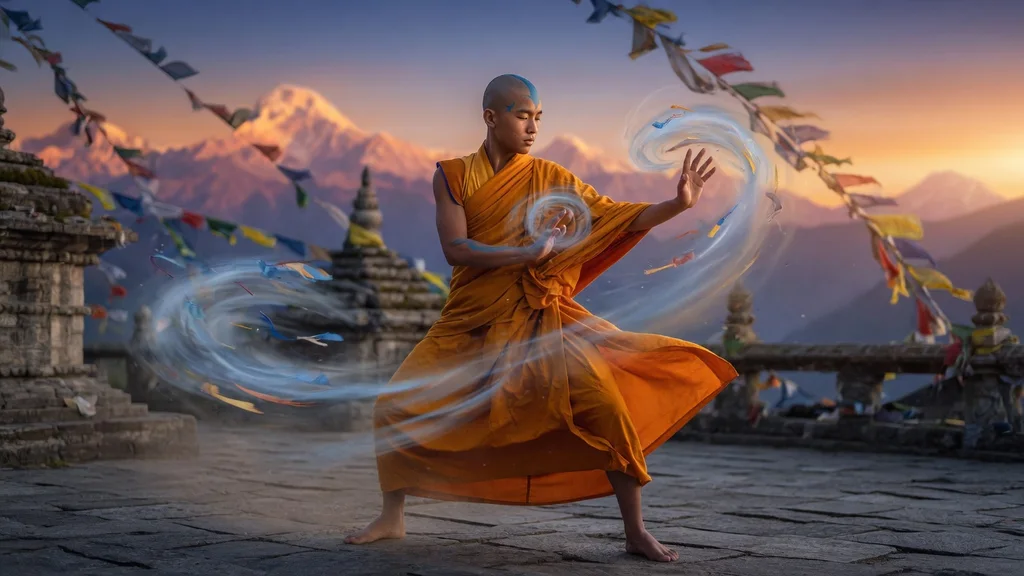
Air Nomad names draw on Sanskrit and Tibetan Buddhist naming traditions, reflecting the real-world monastic cultures the Air Nomads are modeled on. Aang, Gyatso, Tenzin, and Yangchen all sit on soft, open syllables with few hard stops — a deliberate contrast to the Fire Nation's harder sound. The name Tenzin, in particular, echoes a real and still-used Tibetan Buddhist name (it's also the given name of the 14th Dalai Lama), which is part of why the show's Air Nomad naming reads as grounded rather than invented.
Foggy Swamp Tribe: A Different Water Tribe Flavor
Not every Water Tribe member lives at a pole. The Foggy Swamp Tribe, introduced in the original series, is a smaller offshoot living in a swamp far south of the Earth Kingdom mainland, and the show gives its members a noticeably different regional flavor — looser grammar, folksy speech patterns, and a general vibe drawn more from Southern United States and Cajun bayou culture than from the Arctic. Canon doesn't document a separate naming pattern for the Foggy Swamp specifically, so this generator keeps it inside the broader Water Tribe pool rather than inventing a fabricated "swamp dialect" — the distinction here is cultural texture, not a different phonology.
Titles and Epithets Beyond Bending
Avatar's world also has a rich tradition of earned nicknames that sit outside the nation-plus-rank system entirely — the Blue Spirit, the Painted Lady, the Melon Lord, and the professional wrestler alter ego "The Boulder" are all examples of characters taking on a second identity, usually for a specific purpose (disguise, folk legend, showmanship) rather than as a permanent title. Suki's Kyoshi Warriors function similarly as a group identity layered over individual names rather than a naming convention in themselves.
This generator doesn't attempt to reproduce those specific epithets — they belong to individual characters and moments in the story, not to a repeatable naming system — but it's worth knowing the tradition exists if you're building out a character who might earn a second name of their own over the course of a story.
Avatar Roles — Name Inspiration by Title
A name's nation tells you where someone is from. A title tells you what they've earned. Here's how the show's real rank system breaks down, and how the generator applies it.
Master (Any Nation, Bender)
The standard rank for an accomplished bending teacher across all four nations — Master Katara, Master Pakku, Master Piandao (a non-bending swordmaster who's an interesting exception, discussed below). It signals someone qualified to teach their element, not necessarily the most powerful bender alive.
Chief (Water Tribe)
The Water Tribe's leadership title, hereditary in practice though earned through respect — Chief Hakoda leads the Southern Water Tribe's warriors, Chief Arnook the Northern Tribe as a whole. A Water Tribe chief doesn't have to bend; leadership and bending are separate qualifications in this nation.
Fire Lord (Fire Nation)
The Fire Nation's throne, and the rarest title in this generator's pool for good reason — there's exactly one at a time. Fire Lord Ozai and, later, Fire Lord Zuko hold the title in the original series; it always comes with firebending in canon, since the throne has never passed to a non-bender.
Sifu (Any Nation, Non-Bender)
The show's real term for a non-bending martial arts or combat instructor — Sifu Kang is the canon example, teaching non-bending street fighting in Ba Sing Se. It's a useful reminder that the world of Avatar has serious non-bending fighters too: Mai, Ty Lee, Suki's Kyoshi Warriors, and Master Piandao's swordsmanship all matter without a drop of bending behind them.
Avatar (Cross-Element, Extremely Rare)
The one person alive who can bend all four elements, reincarnating in a fixed cycle through the nations — Aang (Air Nomad) in the original series, Korra (Water Tribe) in the sequel. Because canon only allows one Avatar at a time, this generator treats "Avatar" as an occasional flavor title rather than a common result — it's there for fun, not a claim about lore.
Famous Avatar Characters and Their Names
A quick note before the table: everything this generator produces is an original construction. The names below are canon characters from the shows, included only as explanatory reference so you can see each nation's real naming pattern at work — they're never produced as generator output.
| Character | Nation | What It Shows |
|---|---|---|
| Katara | Water Tribe | Compact Inuit-style syllables, soft consonants |
| Sokka | Water Tribe | Hard stop plus open vowel, typical Water Tribe rhythm |
| Toph Beifong | Earth Kingdom | Single sharp syllable given name, noble house surname |
| Long Feng | Earth Kingdom | Two-syllable Mandarin-style construction, title-adjacent surname |
| Zuko | Fire Nation | Hard "z" onset, clipped two-syllable shape |
| Fire Lord Ozai | Fire Nation | Title + given name — the throne is always a title, never a surname |
| Aang | Air Nomad | Soft, open, single-syllable name with a nasal close |
| Tenzin | Air Nomad | Real, still-used Tibetan Buddhist name — no hard stops at all |
| Korra | Water Tribe (Korra era) | Modern reincarnation of the Avatar, raised at the Southern pole |
| Asami Sato | Fire Nation descent, Republic City | Korra-era blended heritage — Japanese-style given name, Republic City surname |
Avatar Names by Nation — Quick Reference
| Nation | Real-World Root | Sound Signature |
|---|---|---|
| Water Tribe | Inuit / Arctic Indigenous | Compact syllables, q/k/ng sounds, long vowels |
| Earth Kingdom | Mandarin Chinese | Crisp two- to three-syllable builds, wide variation by region |
| Fire Nation | Japanese + Chinese blend | Sharper consonants (z, sh, ts), clipped rhythm |
| Air Nomads | Sanskrit / Tibetan Buddhist | Soft, open syllables, almost no hard stops |
How to Use This Avatar Name Generator
Set a Nation — Water Tribe, Earth Kingdom, Fire Nation, or Air Nomads — to draw from that culture's phonetic pool specifically, or leave it on Any Nation to roll across all four. Choose an Era: Aang Era for a straight single-nation build, or Korra Era for the lightly blended, mixed- heritage style Republic City is known for.
Set a gender and whether you want a Bender or Non-Bender — this determines which titles can show up, from Master and Sifu up to the rare Chief, Fire Lord, or Avatar. Use the slider to pick how many names to roll, hit Generate, and click any card to copy it straight into your notes, character sheet, or roleplay bio.
The Legend of Korra: Names in a Mixing World
By the time The Legend of Korra picks up, seventy years have passed and Republic City has grown into a genuine melting pot where the four nations mix daily instead of staying largely separate. Mako and Bolin carry Fire Nation and Earth Kingdom heritage in one family; Asami Sato is Fire Nation by descent but grew up entirely in a Republic City built by Earth Kingdom hands. Korra herself, the Avatar of this era, is Water Tribe by birth but spends most of the story living somewhere none of the four nations fully own.
Selecting the Korra era in this generator doesn't invent a fifth nation or a new phonology — it leans the build toward that same real on-screen pattern, occasionally splicing a second nation's ending onto a name and swapping in a Republic-City-flavored lore caption, while still drawing every syllable from the same four source pools the Aang era uses.
Getting the Cultural Roots Right, Not Just the Vibe
It's easy to flatten "Water Tribe," "Earth Kingdom," "Fire Nation," and "Air Nomads" into one interchangeable "anime fantasy" bucket — plenty of generators and quizzes do exactly that. The show itself doesn't, and this generator tries not to either. Each nation is built on a specific, real, still-living culture: Inuit and Arctic Indigenous peoples for the Water Tribe, Chinese naming tradition for the Earth Kingdom, a Japanese-Chinese blend for the Fire Nation, and Sanskrit-and-Tibetan Buddhist naming for the Air Nomads. None of these are "exotic" flourishes to be mixed and matched freely — they're the specific reference points the show's own creators chose, and keeping them separate is part of taking the source material seriously.
That also means this generator won't produce authentic Inuktitut, Mandarin, Japanese, or Sanskrit names — it produces names in the style of Avatar's fictional nations, which are themselves inspired by, but not identical to, those real cultures. If you need a real name from one of those living cultures rather than a fictional nation's version of it, that's a different (and equally worthwhile) generator to reach for.
Tips for Choosing the Right Avatar Name
- Match nation to backstory first, title second. Decide where your character is from before deciding what they've earned — a Fire Nation refugee raised by Water Tribe healers should probably carry a Fire Nation name, not a Water Tribe one.
- Save "Avatar" for a genuine story hook. It's rare in this generator on purpose; treat a roll that lands on it as a fun prompt, not a name to hand out casually.
- Non-benders need titles too. If your character doesn't bend, Sifu (or plain Chief, for Water Tribe leadership) keeps their competence visible without implying a power they don't have.
- Use Korra Era for modern or mixed-heritage characters. If your story is set generations after Aang, or your character has parents from two different nations, the blended style reads more accurately than a pure single-nation build.
- Say it out loud. Each nation's sound signature is part of what sells it — if a roll doesn't read as that nation's culture out loud, reroll rather than force it.
Example Avatar Names
Water Tribe
- Kaluk
- Tanaluq
- Nunavik
- Sivaq
- Utaruk
- Panaq
- Master Yukanaq
- Chief Naluaq
- Aluttuq
- Kavik
Earth Kingdom
- Baofeng
- Chenlian
- Mingshan
- Xiuwei
- Rongqiang
- Master Hongjian
- Sifu Tianhai
- Yunzhi
- Kangming
- Zhenlin
Fire Nation
- Zutoshi
- Karyo
- Shoken
- Ryukane
- Master Senzo
- Fire Lord Kaira
- Toshiren
- Azataro
- Sifu Renkaze
- Keimei
Air Nomads
- Tenzin
- Gyalpo
- Pemasang
- Sonagyal
- Master Rinchen
- Yeshepo
- Norwa
- Chola
- Wangdor
- Zinsang
About Avatar Naming Patterns
Zoom out and the same shape holds across all four nations: a given name built from that culture's own sound inventory, with a title layered on top only when a character has actually earned one — Master, Chief, Fire Lord, Sifu, or the vanishingly rare Avatar. None of the four pools invents sounds from nowhere; each one is grounded in a real, documented naming tradition the show's creators deliberately chose, which is why this generator keeps them separate instead of averaging them into one generic style.
On honesty and limits. This generator produces original names inspired by each nation's real-world root — it does not generate authentic Inuktitut, Mandarin, Japanese, or Sanskrit/Tibetan names, and none of the lore captions claim to be real dictionary meanings. If you're naming a real person or need names for serious cultural or academic use, consult the Japanese name generator for real Japanese names with verified meanings, or dedicated cultural naming resources instead.
If you're building your own original bending world instead of working within Avatar specifically, our guide to keeping names consistent for a culture walks through the same process — pick a real linguistic root, build a sound inventory around it, and stay consistent — so you can design distinct naming systems for your own fictional nations.
For more East Asian-rooted naming options, branch out to the Japanese name generator for real names with their meanings, the samurai name generator for the historical warrior naming system the Fire Nation's military aesthetic draws on, or the Demon Slayer name generator for Taisho-era Japanese naming in a fantasy register.
FAQ for Avatar Name Generator
Is this the Avatar with Na'vi, or Avatar: The Last Airbender?
This page is Avatar: The Last Airbender — the Nickelodeon animated series about Aang, Korra, and the four bending nations. If you're looking for James Cameron's Avatar films set on Pandora with the Na'vi, use the Na'vi name generator instead. The two only share a title; nothing else overlaps.
What real cultures inspired the four nations' names?
The show's creators drew each nation from a specific real-world culture: the Water Tribe from Inuit and broader Arctic Indigenous cultures, the Earth Kingdom from Chinese (largely Han) naming and dynastic tradition, the Fire Nation from a Japanese-and-Chinese blend with sharper, harder sounds, and the Air Nomads from Sanskrit and Tibetan Buddhist naming, reflecting the monks' real-world monastic roots. This generator keeps those four pools separate rather than blending them into one generic "fantasy Asian" style.
What's the difference between a bender and a non-bender name?
Bending itself isn't a naming convention — Water Tribe, Earth Kingdom, Fire Nation, and Air Nomad names sound the same whether or not the person bends. What changes is the title layered on top: benders can earn "Master" or, rarely, "Fire Lord" or "Avatar," while non-benders in combat roles are traditionally addressed as "Sifu," the show's real term for a non-bending martial arts instructor (Sifu Kang is the canon example).
Why is "Avatar" such a rare result here?
In the show's own logic there is only one Avatar alive at a time, reincarnating across the four nations in a fixed cycle. This generator treats "Avatar" as a title that can attach to a bender name from any nation, but keeps it deliberately rare — it's a flavor detail, not a claim that the result is a canon Avatar.
What changes in the Legend of Korra era?
Names still come from the same four nation pools — Korra's era didn't invent a fifth phonology. What changed on screen is mixing: Republic City is a melting pot, and characters like Mako and Bolin (Fire-Earth heritage) or Asami (Fire Nation descent raised in an Earth Kingdom city) carry blended backgrounds. Selecting the Korra era leans the generator toward that same light cross-nation blending, with modernized lore captions to match.
Why don't Air Nomad names include non-bender examples?
In the show, airbending is close to universal among the Air Nomads rather than a rare gift — nearly everyone born into the culture bends air, unlike the other three nations where benders are a minority. Non-bender titles like Sifu are far rarer for this nation as a result, which the generator reflects by weighting them down rather than removing them outright.
Are Chief, Fire Lord, and Master real titles from the show?
Yes. Chief is the Water Tribe's leadership title (Chief Hakoda, Chief Arnook), Fire Lord is the Fire Nation's throne (Fire Lord Ozai, Fire Lord Zuko), and Master is the standard rank for an accomplished bending teacher across all four nations (Master Katara, Master Pakku). This generator reuses the real title system rather than inventing a fantasy rank ladder from scratch.
Will I ever get a canon character's actual name?
No. Every name from this generator is an original construction built from each nation's phonetic pattern, checked against a denylist of canon characters before it's ever shown. Names like Aang, Katara, Zuko, or Korra never appear as output — they're referenced in this page's text purely as explanatory examples of how the naming system works.
Is this generator affiliated with Nickelodeon or Paramount?
No. This is an independent fan tool with no affiliation, sponsorship, or endorsement from Nickelodeon, Paramount, Viacom, or the show's creators Michael Dante DiMartino and Bryan Konietzko. Avatar: The Last Airbender, The Legend of Korra, and all related characters and terms are trademarks of their respective owners.